





Why Was an L.A. Man Detained for Wearing an Obama-Biden T-Shirt? 🤔
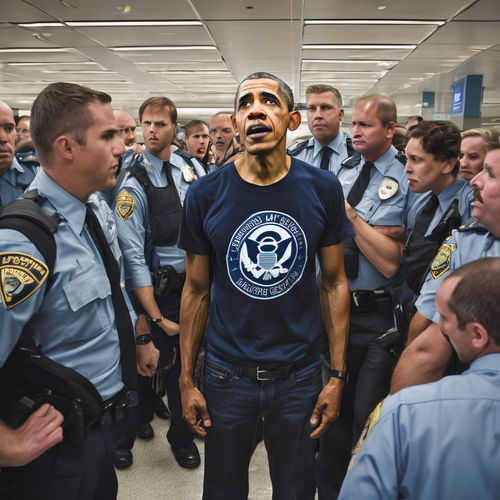
Amid the bustling terminals of L.A.’s airport, where global citizens intertwine their stories, one instance stands out like a rogue thread in a perfectly woven tapestry: a man detained by Customs and Border Protection (CBP) for sporting an Obama-Biden T-shirt. As laughter mingles with the hum of travel announcements, this scenario begs the question: are we still navigating the fine line between political expression and perceived threat in modern America? 🗽
The Incident: A Fabric of Perspectives
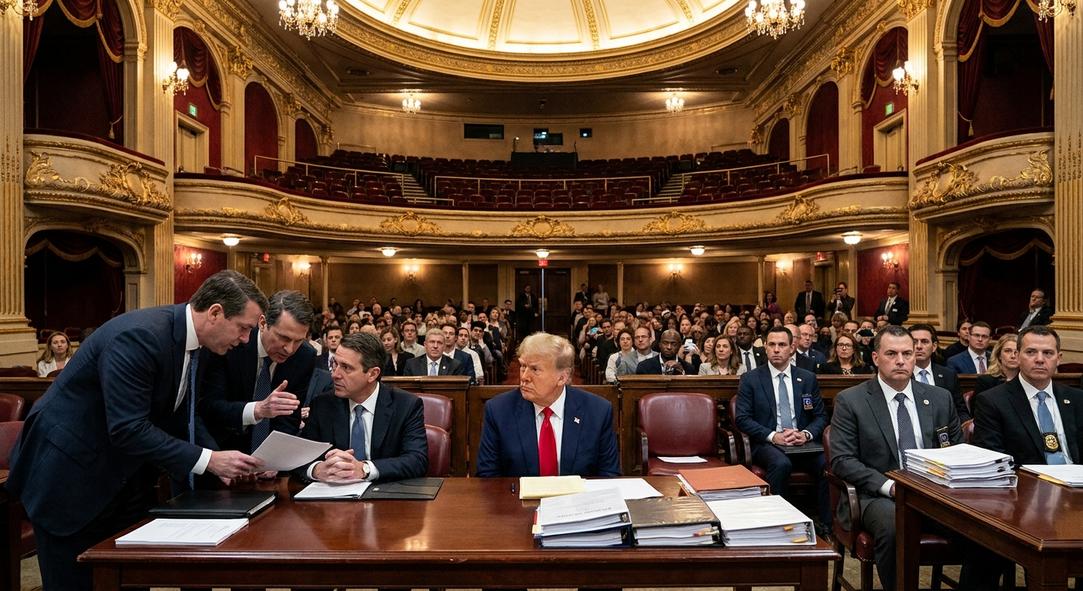
The T-shirt, emblazoned with the faces of former President Obama and Vice President Biden, was intended as a harmless nod to a bygone era of consensus and hope. Yet, for the man wearing it, it morphed into a catalyst for bureaucratic scrutiny. Imagine donning a piece of fabric so innocuous, yet it triggers security measures as if it were the attire of a disgraced celebrity at a courthouse. 👕 Is wearing a political emblem in a public space now an act of defiance or folly?
While many might consider the situation an overreach of authority—a seismic fault line where the tectonic plates of political allegiance and security collide—others view it as a necessary vigilance in a landscape still recovering from the shocks of political polarization and unrest. Ironically, it appears that a simple T-shirt can incite more division than a courtroom brawl, where the concepts of free speech, safety, and national identity are scrutinized under a harsh spotlight. ⚖️
Political Symbols: From Fabric to Faction
Political merchandizing has become a cultural phenomenon, transforming simple garments into potent symbols of identity. Wearing an Obama-Biden T-shirt can evoke nostalgia for a presidency lauded for its inclusivity, yet in some circles, it may also serve as a red flag, warning against the specter of past policies and partisanship. It’s a striking antithesis: beloved icons turned into badges of tribalism where clothing defines more than the self, but also the group’s rhetoric.
- From shirts to statements: In an age where attire spouts political rhetoric, how does one navigate their freedom of expression?
- The lens of security: Are we losing sight of a fundamental right to express political beliefs, or is increased vigilance the new norm?
- Social media amplification: How does the intangible world of social networks dictate personal experiences and their perceptions in the real world?
As the man questioned his detainment, the irony wasn’t lost: here he was merely celebrating a political heritage, yet he had found himself at the center of what felt like a political interrogation. The humor of the absurdity mirrors the experience of many who have donned similar garments while advocating for change, creating a veritable tapestry of human experience woven with threads of irony and conflict.
A Cultural Reckoning
This incident is symptomatic of a larger cultural reckoning regarding political expression. The striking contrast between safety protocols and First Amendment rights embodies a significant tension within American society. Are the measures employed by agencies like CBP genuinely protective, or do they instead serve to infringe upon an individual’s right to express their identity?
In a country that prides itself on the principle of free speech, this clash raises philosophical questions: when does vigilance overstep its bounds, and how can one assess the currency of their opinions amidst national dialogues that grow ever more contentious? As we traverse this complex landscape, it becomes clear that the icons we wear speak volumes about our beliefs—and sometimes lead us into uncharted territory.
Examining the Bigger Picture
In the wake of this incident, it becomes vital to examine broader themes such as national identity, civil rights, and the potentially stifling mechanisms that govern public expression. The intricacies of cultural expression, once lighthearted, risk being muted by elaborate layers of governmental surveillance—almost like writing poetry using invisible ink, the meaning lost in translation.
How do we reclaim that boldness while navigating security? Can we still express our beliefs without fear of repercussion or misunderstanding? Each question prompts further reflection on the value of dialogue beyond the confines of our preconceptions. The subtle shift from personal expression to perceived antagonism calls for renewed conversations about what it means to be an American today.
Towards a More Inclusive Dialogue
Ultimately, the experience of the L.A. man serves as a microcosm of the conversations that require a more sensitive approach to discourse, grounded in understanding rather than judgment. It highlights the necessity of compassion as we shuffle through layers of policy, identity, and expression.
In closing, it seems the man involved didn’t just grapple with the insignia on his chest but also with the reflections of a society still wrestling with the implications of identity politics. As we further integrate into an increasingly polarized landscape, may we find a way to honor the richness of our diversity while serenely advocating for our right to wear whatever emblem of belief we choose—be it on a shirt or written across the skyline of our national anthem. 🇺🇸